
Changemaking Leadership
A workshop series for changemakers wanting to challenge their leadership at the individual, collective, and ecosystem level.
Registrations are now closed. Stay updated on the next edition of this course by signing up to our Newsletter.
About the learning journey
When old systems no longer work and complexity defies linear solutions, leadership is called to transform. In this nonlinear and uncertain landscape, leadership can't be about control; it needs to be about cultivating the inner and collective capacities required to respond with depth, clarity, and care. In societies that are becoming increasingly polarized, changemaking leadership calls us to cultivate the capacity to hold and embrace complexity while striving for a world where everyone has agency.
Join this online space of dialogue and exploration around the topic of Changemaking Leadership. These sessions, facilitated in English, do not aim to provide simple answers or recipes for leadership, but rather tap into the wisdom of our diverse community and propose frameworks, examples, and mindsets to look at leadership questions differently.
Who this is for
This workshop series is for Ashoka community members based in Europe*, who would like to challenge the way they show up as leaders and approach their leadership at the individual, collective, and ecosystem level.
At the individual level, they may ask: How do I cultivate self-awareness and resilience to lead from humility rather than ego? In the team and collective realm, the question becomes: How can I foster collective impact, nurturing everyone’s capacity to lead, by leveraging diversity and tensions? And at the world and ecosystem level, they consider: How can my leadership support the regeneration of living systems and honor the interdependence of all life?
This includes but is not limited to:
- Ashoka Fellows
- ASN members
- Ashoka Young Changemakers
- Social Entrepreneurs
- Corporate partners
*While Ashoka is a global network of changemakers, this global series is created and facilitated by a European team, with content and case studies from our European community. This space might not be representative of other geographical realities, cultural mindsets, and ways of showing up as leaders. We acknowledge the various biases that our perspective might have.
Practical information
Format:
Four weekly online workshops of 90 minutes each, facilitated in English
Course dates:
Wednesdays, from April 8th to April 29th, 2026, at 15:00 CET
Commitment:
Any participant who signs up should commit to attending at least 3 of the 4 sessions.
Registrations are now closed. Stay updated on the next edition of this course by signing up to our Newsletter.
Changemaking Leadership Workshop Series
🤝 Reframing Leadership – A Relational Lens on Power, Care, and Connection
Participants will critically examine traditional models of leadership and explore how care-rooted approaches can foster relational, collective, and justice-centered approaches.
🧩 Co-Leadership – Sharing power and responsibility in organizations
Participants will explore the notion of co-leadership, discuss how power can be distributed, and how leadership can be shared to strengthen collective impact.
💛 Leading in complexity – Embracing Diversity and Tension
Participants will reflect on how complexity requires us to lead differently by enabling environments where diversity is embraced, tension is held constructively, and everyone can contribute fully.
🌱 Leaders as Stewards of Ecosystems – Putting regeneration of living systems at the center
Participants will explore how they show up as leaders and their impact on the health of the systems they operate in, recognizing interdependence and their role in sustaining and regenerating living systems.
Guest Speakers


Magdalena Pocheć
Magdalena is catalyzing a changemaking ethos and practice in communities overlooked by traditional public and private philanthropic and other social institutions. Through the participatory grantmaking process of FemFund, which targets marginalized communities, she is upending traditional philanthropic practices, turning grant seekers into co-creators and decision-makers, and fostering solidarity among women of all ages across multiple social divides, who gain agency and voice in solving problems confronting their communities and geographies.
FemFund's model challenges traditional grantmaking frameworks, which often rely on rigid, top-down processes that prioritize the funder’s expectations over the needs of communities. By extending decision-making into the hands of applicants, Magdalena transforms a static philanthropic procedure into an empowering, democratic tool rather than a bureaucratic exercise.


Li An Phoa
Li An is redefining how societies care for water by transforming the health of a river into a shared civic goal: making rivers drinkable again. Her idea replaces technical, fragmented approaches to water pollution with a simple, intuitive norm: "Would you drink from your river?" that turns ecological well-being into a personal and collective responsibility.
This shift allows communities to reconnect with rivers as living systems and positions drinkability as a universal indicator of shared prosperity, environmental justice, and long-term regeneration. To make this shift possible, Li An developed a methodology that brings people from awareness to collective action. She creates spaces where communities experience the river directly, witness its beauty and degradation, and rediscover their connection to it. Along the way, she mobilizes local actors, from schools to mayors to farmers, ensuring that each walk is co-created with the stakeholders responsible for the river's governance and care.
From these experiences emerge civic pacts in which communities, institutions, and municipalities commit to the protection and regeneration of their rivers. Some of these alliances have grown into larger governance structures. By embedding drinkable or swimmable rivers into local climate and biodiversity strategies, piloting “swimability” programs, and contributing to shared budgets, these municipalities demonstrate how soft norms can evolve into coordinated systemic action.
Read more about Li An and Drinkable Rivers.

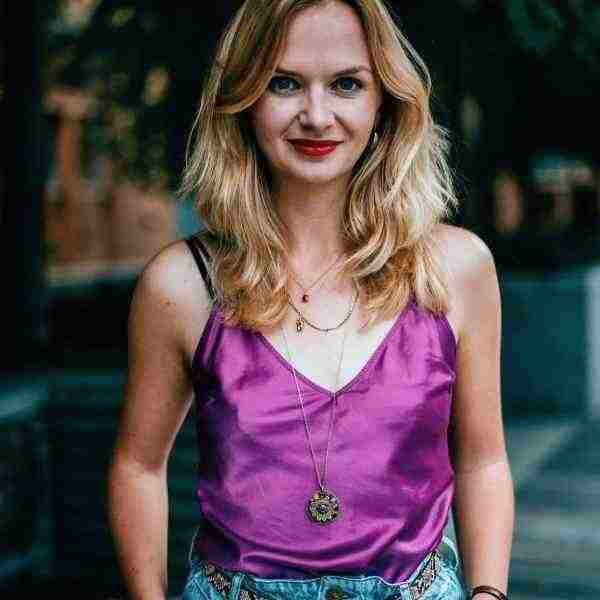
Kristina Lunz
Kristina stimulates a cultural transformation of global foreign policy towards feminist values. She does this by connecting a feminist approach in social sciences with ministries and the active thought-leader civil society.
The goal is to overcome dominant political thought patterns and patriarchal conventions. In doing so, she fosters an increase in peacebuilding, the support of human rights, and the elimination of gender stereotypes.
Read more about Kristina and the Centre for Feminist Foreign Policy.

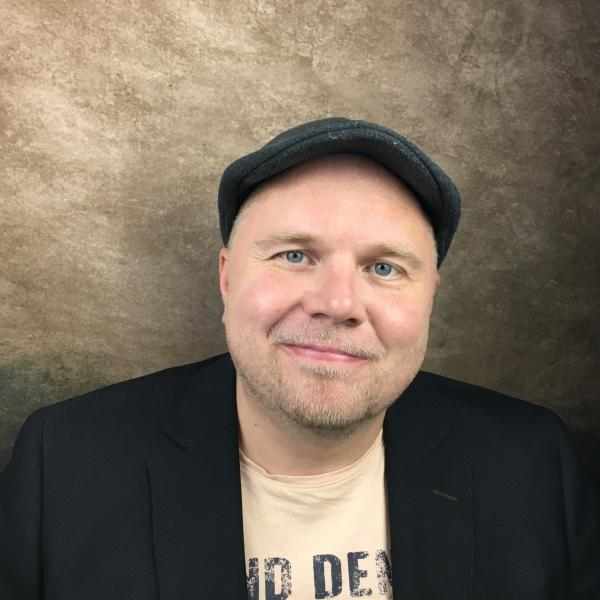
Markus Raivio
Markus has designed a new approach to mental healthcare that enables those with severe mental health challenges such as psychosis, personality disorders, and severe depression, to focus on skill sharing and co-creation in the arts to build self-confidence, resilience, and community. His model severs the often-debilitating link between diagnosis, illness, and identity – especially for those just leaving hospital care.
Markus has designed a viable alternative to deficit-based mental healthcare by prioritizing clients’ passions and strengths in “diagnosis-free” spaces, shifting how hospitals and therapists talk about their patients and care, and building partnerships with and between organizations that work with wellbeing and the arts.
Workshops Leaders & Facilitators

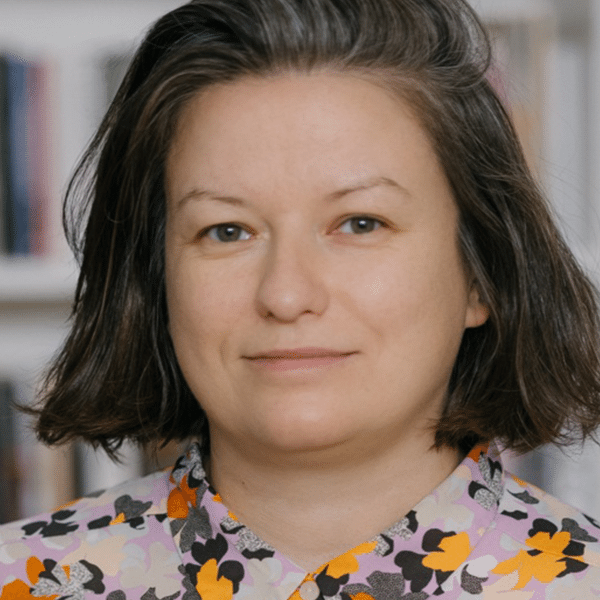
Martyna Markiewicz
Martyna Markiewicz has been professionally supporting networks, organizations, groups, and individual changemakers for almost 20 years.
She mainly focuses on the areas of gender equity and diversity, inclusion and equity (DEI), and wellbeing in social change. Trainer, Joker of the Theater of the Oppressed, Design Thinking moderator.
Member of the Board and Head of Partnerships at Ashoka Poland, DEI Lead for One Community Europe, member of Ashoka’s DEI Global Extended Team.

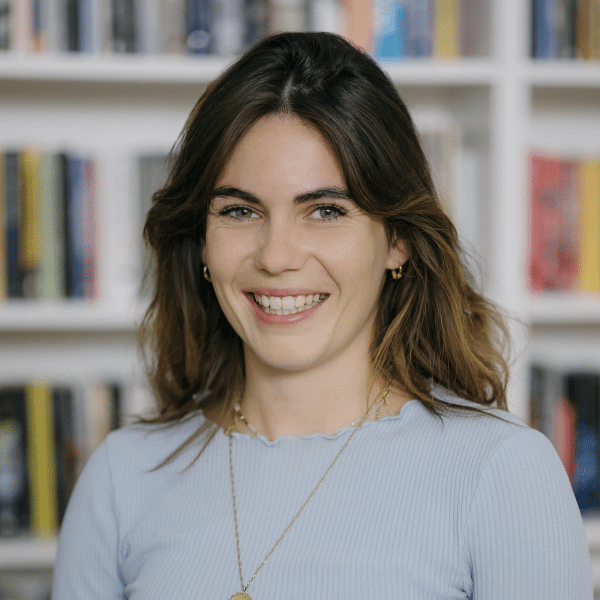
Léna Borsoi
Léna Borsoi co-leads the learning journey "Leading Multi-Stakeholder Collaborations" of the Europe Fellowship program. She also co-created and co-leads collaborative initiatives gathering, respectively, Ashoka Health Fellows and Gender fellows who are analyzing systemic issues in their region and joining forces to address them.
For several years, she has been researching and working on the nexus between leadership and impactful cross-sector collaborations, more particularly as a program manager for the Executive in Residence program, supporting collaboration between corporate leaders and social entrepreneurs.