
Ashoka Fellows Featured in "The Systems Work of Social Change"
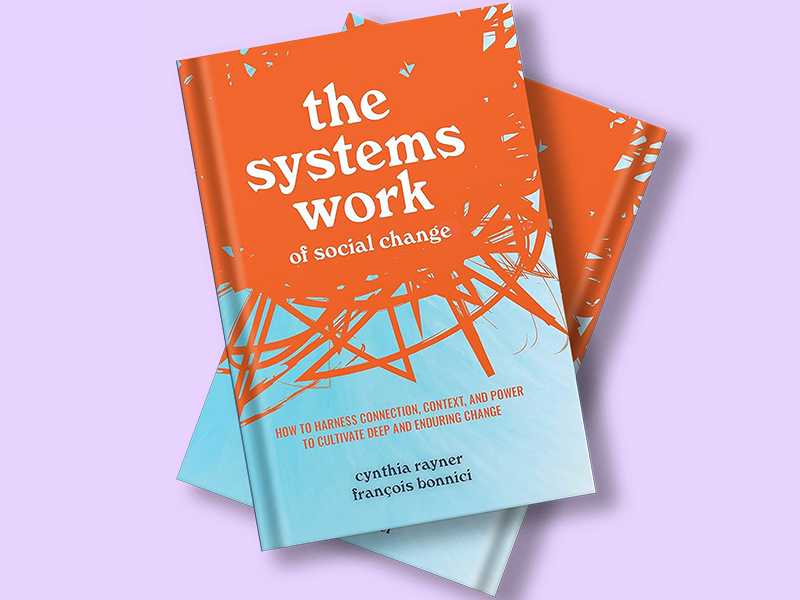
In their new book The Systems Work of Social Change, social innovation researcher, writer, and lecturer Cynthia Rayner, together with Schwab Foundation for Social Entrepreneurship Director Dr. François Bonnici, argue that achieving true systemic change demands a radically different approach from the one we use today.
In showing us a new way forward, the authors showcase the innovative work of leading social purpose organizations, among them eight led by Ashoka Fellows.
It is a book that speaks to the moment."
~ Diana Wells, President Emerita, Ashoka
The authors believe that social change approaches relying on industrial models of production and power fall short in their ability to promote greater equity or meaningful change at a systemic level.
Drawing from 200 years of social change literature and practice, hundreds of interviews, and case studies of organizations spanning 5 continents, the authors provide practical strategies, experiences, and examples of impactful systems work.
It encourages practitioners, policymakers, and funders not only to do something radically different but to understand our social systems in radically different ways." ~ Jeroo Billimoria, Ashoka Fellow, Catalyst 2030, and One Family Foundation founder
The authors underline three key principles of unlocking this type of impactful change at a systemic level: connection (how people are working together), context (how people adapt their work to their context), and power (who makes the decisions). This approach radically departs from typical industrial values of big bets and top-down solutions, and instead emphasizes process and people over outcomes.
As part of illustrating this approach, the authors highlighted these eight organizations led by Ashoka Fellows as exemplary models in innovative and effective systems change work:
Mitchell Besser (Skoll Award 2008) | |
Family Independence Initiative (Now 'UpTogether') | |
Joel Bolnick (Skoll 2014) | |
Jeroo Billimoria (Schwab Award 2001, Skoll 2008) | |
Arbind Singh (Schwab 2008, Skoll 2012) | |
Clara Victoria Colbert (Schwab 2002; Skoll 2007) |
Not only do the authors wish to support readers in visualizing how these approaches look in our world. They also invite individuals to enact systems change in their own lives and work, and "ensure broader agency for people and communities to create social systems that are responsive and representative in a rapidly changing world."
Engaging with The Systems Work of Social Change, according to the authors, is one way to get there.